

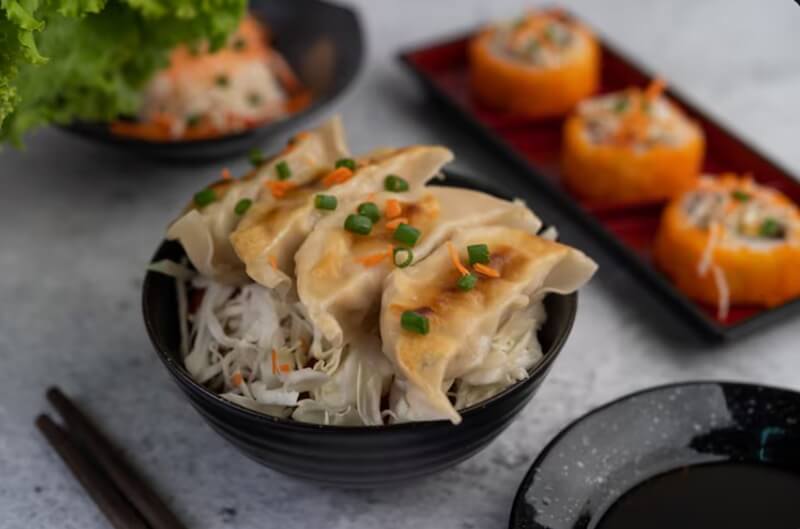
In places like New York, Los Angeles, and even more sedate college towns, a certain moment keeps coming up. There is a wait outside a dim sum restaurant with steam obscuring the windows in the late morning, possibly approaching noon. Not retirees, not families. While waiting for dumplings, most people in their early twenties are using their phones to compare TikTok videos. It’s difficult to ignore what’s absent from that scene. Nobody is discussing getting a quick burger.
Fast food restaurants like McDonald’s have long based their brand on affordability and speed. At least in theory, that formula is still effective. However, something seems strange when observing Gen Z make dietary decisions. Convenience is not completely rejected by them. Simply put, they are becoming oddly picky about what counts.
| Category | Details |
|---|---|
| Generation | Generation Z (born ~1995–2010) |
| Key Behavior | Prefers experiences over convenience |
| Dining Trend | Shift from fast food to communal dining (dim sum brunches) |
| Influencing Factors | Cost pressure, social media, authenticity, health awareness |
| Notable Chains Affected | McDonald’s, Chipotle |
| Popular Alternative | Dim sum (Cantonese cuisine, shared small plates) |
Money has a role, but not in the way older CEOs may think. Rent is rising, earnings are lagging, and school loans are gradually returning, putting Gen Z under financial strain. Once thought to be inexpensive, a $12 or $15 supper today feels like a choice. Strangely, fast food no longer always wins that comparison.
Fast food seems to have lost its psychological advantage. Despite the introduction of discounts, surveys indicate that Gen Z is less likely to consider it a good value. When the experience is… unremarkable, a $5 meal offer loses its charm. Even when it’s not stated directly, that word is used frequently. Conversely, dim sum doesn’t claim to be effective.
There’s a little pandemonium when you sit at a packed table for the first time steam baskets placed haphazardly, waitresses navigating aisles with trolleys. Suddenly, the meal is less about eating and more about participation as someone reaches for har gow and another pours tea. It’s plausible that Gen Z is really paying for a scene rather than just food. And that is now more important than it was.
Food is shared, recorded, and, in some ways, performed in the world that Gen Z grew up in. There isn’t much story to be found in a tray of similar burgers. A table laden with little appetizers, buns, and dumplings, each somewhat different, does. It conveys a narrative without being overly dramatic.
Additionally, this age appears to be particularly sensitive to the issue of authenticity. Despite its constancy, fast food has an artificial feel. With its roots in Cantonese customs, dim sum has cultural significance. Fast food just cannot match the sense of community that is created by even simple customs like sharing meals or asking servers to chop larger things into bite sized amounts. Although it’s still uncertain if Gen Z fully comprehends the cultural roots of what they’re adopting, they appear to appreciate the sense of authenticity, even if it’s not perfectly understood.
Although it is less noticeable, health does have a part. Plant forward meals are preferred by many Gen Z diners, or at the very least, they are expected. Fast food has made an effort to change, offering substitutes and healthier options, but occasionally it seems like an afterthought. Dim sum naturally fits well with that approach because of its variety vegetables, seafood, and smaller amounts.
The social dynamic comes next. Fast food is frequently isolated, or at most parallel. Though not truly together, people dine together. Dim sum necessitates communication. Tastes are compared, decisions are negotiated, and plates are shared. One person consistently places excessive orders, while another is adamant on having one more round. It is ineffective. It’s disorganized. And it may be just the goal.
There’s a subtle change taking place as you see a gathering of Gen Z diners linger over tea and browse over pictures they just took of the dinner. They’re not merely eating. Moments are being curated even businesses like Chipotle, which was formerly thought of as the link between fast food and experience, are under pressure. Their model loses the communal unpredictability that dim sum delivers, but it still offers customisation and perceived quality. Even with meticulous assembly, a burrito bowl remains a solitary act.
Interestingly, Gen Z isn’t completely giving up on convenience. During the week, they still mostly rely on takeout, apps, and quick dinners. However, they appear to be redefining what worth it means when it comes to going out, particularly on weekends. Speed is no longer a factor. It has to do with memory.
There is a sense that this change may continue, albeit in a different direction. Gen Z may occasionally turn back to less expensive solutions due to economic pressure. Trends have a tendency to cycle quickly, particularly those driven by social media. The appeal of dim sum itself may diminish if it is overexposed. However, it appears that something more profound is taking place.
Gen Z isn’t merely selecting different foods. The rules governing why people eat out in the first place are being subtly rewritten. Furthermore, fast food, which was founded on a completely different set of presumptions, is still attempting to catch up.
i) https://www.fortune.com/article/gen-z-different-attitude-about-dining-baby-boomers-millennials/
ii) https://www.foxnews.com/opinion/why-gen-z-suddenly-skipping-15-burrito-bowl
iii) https://www.thetakeout.com/why-gen-z-stopped-going-to-restaurants-1849152901/
iv) https://www.davidrmann3.substack.com/p/gen-z-is-rewriting-your-restaurants