

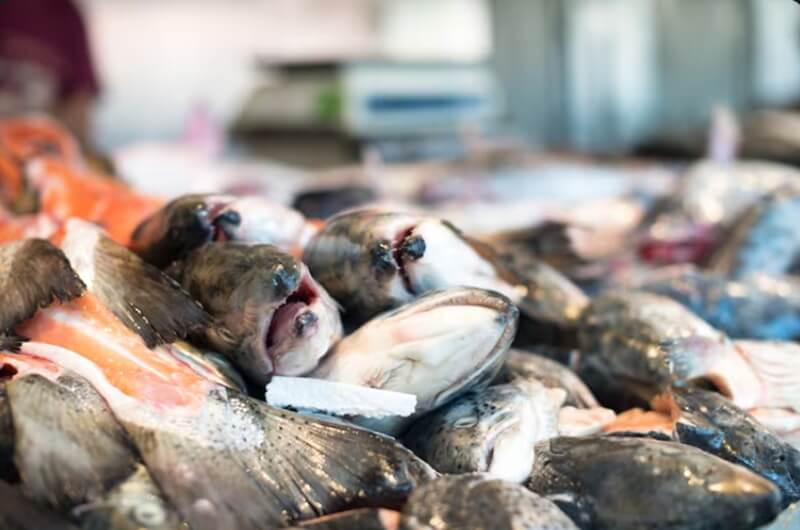
Sometimes a chunk of Alaskan salmon goes through an odd journey before it ends up on your dinner plate. It is transported from the icy waters of the North Pacific frozen whole on a processing ship placed into a container headed for China thawed and filleted at a factory thousands of miles away from the point of capture refrozen and then transported back across the ocean to a store in say suburban Virginia. The fish is American yet the label reads Product of China. If that seems like a committee designed system it was for the most part. And there is currently significant pressure on that system which is vast brittle and valued at hundreds of billions of dollars.
The average American consumes roughly 20 pounds of seafood annually which seems acceptable until you find out that official nutritional standards suggest consuming closer to 26 pounds. Most people are unaware of how important that gap is. Fish contains omega 3 fatty acids which are one of the best dietary strategies for lowering cardiovascular disease which is still the nation’s top cause of death. Just one or two meals of seafood each week can reduce the risk of coronary death by more than a third according to a highly referenced study published in JAMA.
| Category | Details |
|---|---|
| Industry | Global Seafood & Aquaculture |
| Estimated Market Value | Over $300 billion globally (2024) |
| U.S. Seafood Imports (2024) | Approximately 6.5 billion pounds |
| Top U.S. Import Sources | China (769 million lbs), India, Vietnam, Canada |
| Most Consumed Seafood in U.S. | Shrimp, Salmon, Canned Tuna, Tilapia |
| Average U.S. Consumption | ~20 pounds per person per year |
| USDA Recommended Intake | 26 pounds per year (8 oz per week) |
| Global Seafood Waste | ~110 billion pounds annually |
| Key Policy Concern | Tariffs up to 145% on Chinese seafood imports (as of April 2025) |
| Key Investor Network | FAIRR Initiative ($80 trillion-backed) |
| Reference | NOAA Fisheries — U.S. Seafood Trade |
Therefore it’s not merely a matter of food preferences when around 90% of Americans don’t meet that weekly goal. Under the cover of a grocery receipt you are witnessing a public health issue. The fact that three quarters of the seafood consumed by Americans is imported makes this more difficult to sort out. Vietnamese and Indian shrimp.
Chinese tilapia. raised Atlantic salmon in Chile and Canada. For many years the imports reduced the cost of fish especially for people with lower incomes. As farming operations spread throughout Southeast Asia the real price of shrimp fell sharply. Salmon’s arc was similar. Without such international supply routes fish could still be considered a luxury protein in the majority of American homes something that is ordered at restaurants rather than defrosted on a Tuesday night.
The tariffs followed. Chinese seafood imports are subject to tariffs as high as 145 percent as of early 2025. Vietnam and India are at 10% and planned increases have been put on hold but are still in the air. A 25 percent levy is imposed on Canada the fourth largest exporter of seafood to the United States and a significant source of farmed salmon.
The math is straightforward and harsh Americans purchase less imported seafood when its price increases. Additionally they usually don’t seek for greens when they purchase less fish. They reach for foods that are less heart healthy more affordable and readily available domestically including pork chops ground beef and chicken nuggets. It seems that while policymakers were aware of the trade consequences of these tariffs they may not have fully considered the dietary ones.
It’s not just the distances involved that make the supply chain itself so incredibly complicated. Before reaching a customer wild caught seafood travels through flag states landing ports primary and secondary processing facilities export hubs and occasionally re export channels. Hatcheries feed supply networks grow out farms auction houses and peeling operations are just a few of the layers that aquaculture adds.
Something can go wrong at any point and it frequently does. According to a 2015 study published in Global Environmental Change the United States loses almost half of its seafood supply annually or around 500 million pounds of wasted protein. The amount is 110 billion pounds worldwide. Every year that amount of lost seafood disappears into bycatch spoilage processing trash and the back of consumers’ refrigerators enough to feed millions of people.
It’s difficult to ignore the paradox at the core of the farmed salmon industry which primarily relies on wild fish for feed while posing as a sustainable substitute for wild caught fish. Fish oil and fishmeal which are both derived from wild fish are still vital components of salmon diet. Ninety percent of the world’s fisheries are already overfished or above capacity according to UN data. However by 2033 the salmon farming industry anticipates a 40% increase in production.
Fishmeal and fish oil production is predicted to increase by just 9 and 12 percent respectively during about the same period according to a recent warning from the FAIRR Initiative an investor network supported by $80 trillion in assets. Everyone involved seems to be aware that the figures don’t add up.
Fish oil prices increased by more than 100% in 2023 when Peru canceled its anchovy fishing season. The largest salmon producer in the world Mowi suffered a 70% increase in feed expenditures between 2021 and 2023. For a short while some businesses shifted to algal oil but after prices stabilized they discreetly reverted. That isn’t a tactic. That’s assuming the next catastrophe doesn’t arise.
Then there is the labor issue which is often overlooked in favor of talking about tonnage and taxes. At least 260 million people work in the fish industry globally many of them in underdeveloped nations with lax control and widespread abuse. The seafood industries of Indonesia Thailand Vietnam the Philippines Peru and other countries have been found to use forced labor. Employees aboard far off fishing boats are physically isolated frequently hired through labor brokers and occasionally unable to leave.
A methodology known as the Labor Safe Screen which was tested on 118 items and 18 companies discovered that although corporations might use human rights data and traceability systems to identify areas of risk audits and scorecards alone would not be sufficient to completely eradicate forced labor from these supply chains. It calls for something more akin to a moral reckoning which the majority of businesses have been reluctant to do.
At the same time a more subdued form of innovation is taking place on the periphery. A man named Liwei Liao operates a zero waste seafood shop and cafe in Sherman Oaks California. He dry ages fish yes including cattle to increase its shelf life by weeks or even months. One for Neptune a business in the Pacific Northwest transforms waste into shelf stable protein by turning processing leftovers into fish jerky. Tidal Vision in Alaska turns leftover crab shells into chitosan an antibacterial material used in everything from winemaking to medical procedures.
By distributing the whole haul community supported fisheries like Dock to Dish shorten the chain and reduce bycatch by connecting local fishermen with eateries and customers. These are minor actions that hardly scratch the surface of the issue. However they point to something that the business as a whole has been hesitant to acknowledge the existing approach isn’t merely ineffective. It’s shattering.
Naturally the billion dollar fish supply chain is not truly concealed. The majority of us simply don’t look. Instead of the trawler in the South China Sea we see the shrimp on the platter. Instead of anchovies ground into feed pellets off the coast of Peru we see salmon fillets. Instead of the Thai factory worker we see the price tag.
There is a future in which this system adapts where labor laws are upheld waste is reduced alternative feeds become feasible and tariffs do not penalize the people they are meant to assist. It is still really unclear if that version will be available in time. The ocean doesn’t wait for cycles in policy. It turns out that the market doesn’t either.
i) https://www.thinkglobalhealth.org/article/hidden-health-penalty-seafood-tariffs
ii) https://www.sierraclub.org/sierra/we-re-running-out-seafood-yet-we-waste-billions-pounds-it