

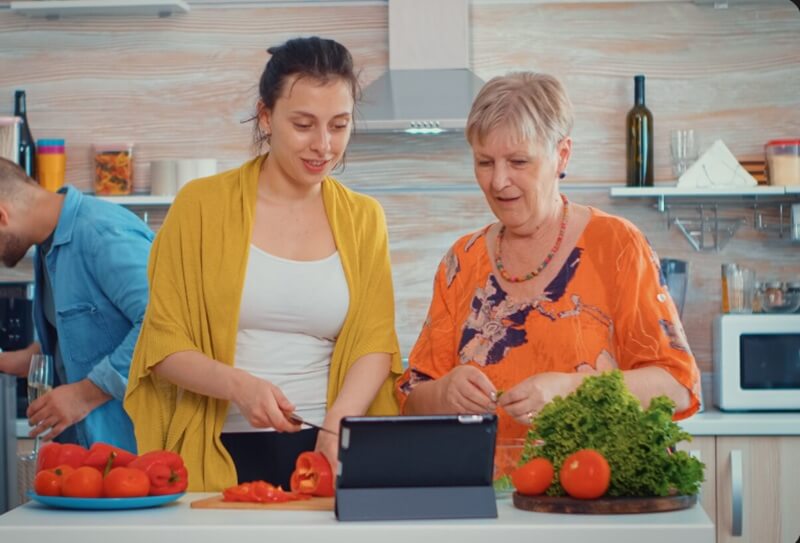
Some where in the Liwan neighborhood of Guangzhou a woman in her seventies is steaming an entire garoupa in a little kitchen. Nothing has been measured by her. After steaming the soy sauce is added based on the color pooling around the fish’s belly rather than tablespoons. The ginger is sliced by feel which is thin and practically translucent. She started doing this decades ago in a kitchen that no longer exists after learning from her own mother. The recipe has not been recorded. It is in her hands.
Meanwhile developers at a business called Cloud Chef have installed cameras and thermal sensors above a commercial cooktop in a sunny San Jose office park. Their goal is simple and massive they want to record every motion temperature change every time a chef turns a piece of meat or stirs a sauce. Then they want to turn that information into a formula that is so precise that any person or computer could make the dish flawlessly. One day this technology might be able to preserve precisely the type of cooking that Liwan’s grandmother does mindlessly. It might also completely miss the point.
| Field | Detail |
|---|---|
| Subject | AI-driven recipe replication vs. traditional Cantonese home cooking |
| Key Technology | Machine-learning recipe capture, sensor-based cooking analysis (e.g., CloudChef platform) |
| Region of Focus | Guangdong Province, China; Cantonese diaspora kitchens worldwide |
| Cultural Significance | Cantonese cuisine — one of the Eight Great Traditions of Chinese cooking — relies heavily on oral transmission and sensory judgement |
| Emerging Trend | “AI grandsons” and AI-generated recipe content going viral in China (2024–2025) |
| Core Tension | Precision of algorithmic cooking vs. intuition, memory, and cultural identity embedded in heritage recipes |
The conflict between historical cookery and artificial intelligence has been simmering for a few years but it reached an odd boiling point around China’s 2025 Lunar New Year. When families returned home for the holiday they found their older relatives riveted to short video applications mesmerized by round faced red clad AI generated toddlers that seemed to chop vegetables roast whole pigs and serve multi course dinners.
The grandparents observing the so called AI grandsons either didn’t realize or didn’t care that they were nothing more than digital fabrications. The grandmothers became agitated when younger family members attempted to clarify that the babies weren’t genuine. The emotional bond had already been established.
Chemistry is only one aspect of a recipe. At six in the morning a woman is standing over a wok using sound to determine when the oil is ready.
That response reveals something. It implies that the allure of these movies to a generation of elderly Chinese women was not technological innovation but rather the idea of continuity of a young person continuing the kitchen customs. In particular Cantonese cooking relies on a chain of transmission that is nearly wordless.
Cookbooks don’t describe methods like wok hei that elusive slightly burned breath of taste that can only be achieved at intense heat with precise timing. Standing next to someone who already knows they’ve been engrossed for years. Now the question is whether they can also be absorbed by algorithms.
The credentials of AI appear promising on paper. In just a few seconds machine learning algorithms that have been trained on millions of recipes can create whole meal plans from a picture of an open refrigerator suggest ingredient pairings that no person would try and customize dishes to meet particular dietary requirements.
Busy home cooks who value convenience over tradition have embraced platforms like Dish Gen and Meal Gen. The technology functions flawlessly for that audience. However efficiency isn’t the main focus of Cantonese heritage cooking.
Think about clay pot rice which sounds straightforward rice Chinese sausage and a little dark soy but is anything but. The age seasoning and heat distribution of the clay pot itself are important factors. The bottom of the rice should develop a golden crust that is fragrant crackling and not scorched. The difference between perfect and wrecked is around fifteen seconds and it takes a type of bodily intuition that no sensor has yet been able to measure to determine where that line falls.
The pot’s temperature curve might be captured by an AI. It may record the rice’s moisture content. However the grandmother preparing this meal isn’t looking at data. She’s listening to the crisping sound of the rice. Just before it gets out of control she can smell it.
This is not to argue that technology is unimportant. In actuality the preservation issue is quite urgent. More quickly than anyone is willing to acknowledge Cantonese culinary expertise is vanishing. In Guangdong and Hong Kong younger generations are increasingly ordering delivery or dining out; the hours long preparations their grandmothers used to make such as slow simmered soups and hand wrapped rice dumplings for the Dragon Boat Festival seem incongruous with contemporary work schedules.
The archive alone would be useful if AI could at least record what these cooks do including the small choices that are never recorded in a written recipe. Despite its optimism from Silicon Valley CloudChef’s sensor rich method is pointing toward something worthwhile preserving culinary expertise that may otherwise disappear in a generation.
Replication is not the same as documentation. A Cantonese grandma may pour her oyster sauce at 4 32 when the wok top reaches 280°C according to a recipe record. It can’t explain why she stops first cocking her head slightly to compensate for the wetness she senses on her skin. It is unable to convey the memories associated with the dish such as the first time it was served at a funeral or the afternoon her daughter begged to learn it and she told her Watch don’t write. Reducing such cooking to data points seems to accomplish more than just make it simpler. It misinterprets what it is.
Uncomfortable concerns regarding cultural sensitivity have also been brought up by the AI recipe phenomena. Food bloggers revealed earlier this year that AI generated recipe summaries on popular search engines were generating Cantonese dishes with strange substitutes such as heavy cream in a broth that should be clear and clean or cheddar cheese in congee.
The algorithms lack the contextual awareness to recognize that Cantonese cuisine prioritizes the natural flavor of ingredients over nearly everything else because they were trained primarily on Western recipe databases. In French cooking a little cream might be useful. It would be considered a form of culinary vandalism in a Cantonese double boiled soup.
However completely rejecting AI seems like a form of intransigence in and of itself. Wu a 24 year old guy from Shanghai gained notoriety when he used generative AI to replicate talks with his late grandmother including her cooking tips and her recollections of making Lunar New Year dishes.
Although opinions on the project were divided some found it poignant others unsettling it revealed a genuine need to cling to the presence and knowledge that death takes away. Perhaps a sufficiently sophisticated cooking AI might mimic a grandmother’s steamed fish if a chatbot can mimic her speech. Not quite. Not in the same sense. However close enough to sustain life.
Whether the technology will advance fast enough to be significant is still up in the air. The Cantonese ancestral dishes are being passed down through the elderly grandparents. The window of opportunity to record their knowledge in any manner whether digital or not is getting smaller.
In order to create unofficial archives that combine recipe instruction with family lore several families have begun filming their elders cooking and sharing the films on Douyin and YouTube. Although they don’t have the precision that machine learning may theoretically deliver these efforts feel more honest and human than any AI solution now available.
The most truthful response could be that AI can replicate a traditional Cantonese dish in the same way that a camera can replicate a sunset. The hues are present. It could possibly be a lovely composition. However you are unable to smell the evening air or feel the warmth on your face.
An algorithm is not necessary for Liwan’s grandmother. She needs her granddaughter to stand next to her observe the shimmering oil and learn from presence rather than facts. The true test is whether technology can enhance such interchange without taking its place and the outcome is still unknown.
i) https://www.msn.com/en-us/foodanddrink/foodnews/the-rise-of-ai-generated-recipes-can-a-bot-out-cook-grandma/ar-AA1FEUje
ii) https://www.scmp.com/news/people-culture/trending-china/article/3299818/chinese-grandmas-fall-head-over-heels-ai-grandsons-who-cook-dinners-spread-laughter
iii) https://www.bloomberg.com/news/articles/2025-11-25/ai-slop-recipes-are-taking-over-the-internet-and-thanksgiving-dinner
iv) https://www.medium.com/@tiffany-cheong/tradition-or-ai-cooking-9562a2bd7ea1